Mud, Moors and Maintenance: Why Green Laning Is the Best Thing You Can Do with Your Land Rover
26th March 2026
Mud, Moors and Maintenance: Why Green Laning Is the Best Thing You Can Do with Your Land Rover
By Dan Hinton, Torr Overland
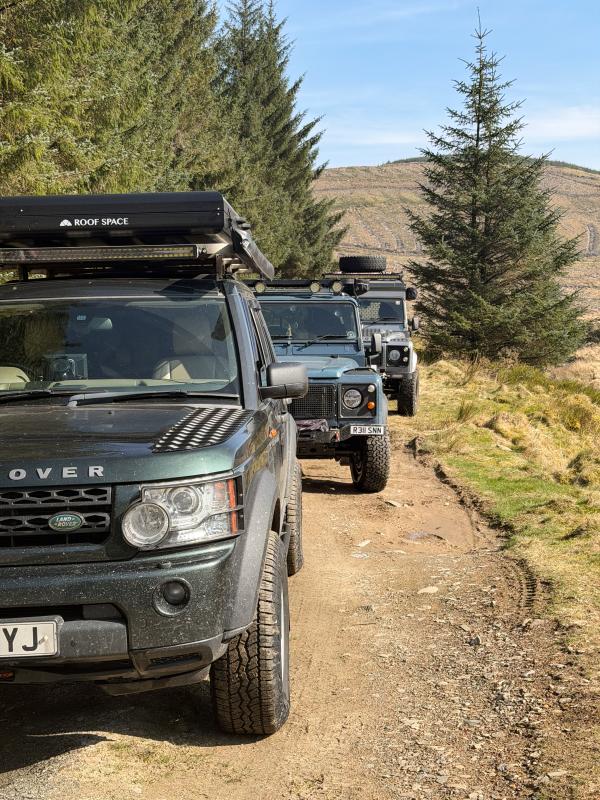
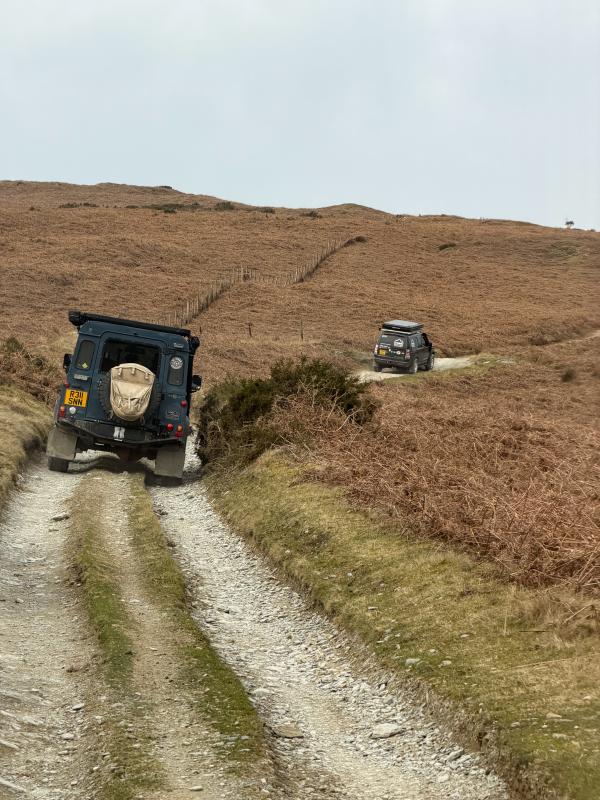
There’s a moment that every green laner knows. You’ve just crested a ridge on a sunken Devon track, hedgerows pressing in on both sides, the engine ticking over quietly in low range, and then the lane opens out onto a hillside view that would stop anyone in their tracks. No traffic. No tarmac. Just you, your Land Rover, and a horizon that looks like it was painted for the occasion. It’s the reason most of us got into this in the first place.
I’ve been guiding people across the green lanes and byways of South Devon and Dartmoor through Torr Overland, and the reaction is almost always the same: wide eyes, big grins, and an immediate question about when they can come back. Green laning gets under your skin. But there’s something else it does too. It exposes every weakness your vehicle has been hiding.
What Actually Is Green Laning?
Green lanes are the colloquial term for unsealed country roads with legal vehicular rights of way; Unclassified County Roads (UCRs) and Byways Open to All Traffic (BOATs). These are proper legal highways, marked on Ordnance Survey maps, that you have every right to drive. They’re found throughout England and Wales, and in areas like mid Wales and Dartmoor, they form an incredible network of ancient tracks, drovers’ routes and moorland trails.
The key word here is legal. This isn’t about blasting across private land or tearing up protected ground. Responsible green laners drive within their rights, follow the Countryside Code, and leave the lanes in the same condition they found them. I’m a member of the Green Lane Association (GLASS), and I’d recommend anyone serious about the hobby to join too. For around £53 a year, you get access to their excellent Trailwise2 mapping tool, which shows you exactly where you have legal rights of way and includes user notes on current lane conditions. It’s an invaluable resource.
Why Your Land Rover Was Born for This
There is no vehicle better suited to green laning than a Land Rover. Low-range gearing gives you extraordinary control over speed and traction on tricky terrain. It’s a completely different experience to just engaging four-wheel drive and hoping for the best. Add diff-locks into the equation and you have a machine that can genuinely go places that would have most other SUVs beached in a ditch.
The logic of a diff-lock is elegant when you think about it. An open differential sends power to the wheel with least resistance which in mud or on a side-slope means the wheel that’s spinning uselessly in the air. Lock the diff and you split power 50/50 between the driven wheels, meaning the wheel with grip actually gets some drive. That’s the difference between moving forward and being stuck.
But here’s the thing: all of this capability only exists if the vehicle is in good working order. A Land Rover in poor condition on a green lane isn’t just frustrating, it can be a real problem when you’re a mile and a half down a track with no mobile signal and a blown CV joint.
Green Laning Reveals Everything
I always say that a day on the lanes is the best diagnostic check your Land Rover will ever have. Road driving hides a lot of sins. Steering wander gets masked by instinctive corrections. A slightly spongy brake pedal goes unnoticed at 30 mph on a straight road. Worn bushes get lost in road noise. Off-road, all of that gets amplified. The uneven surfaces, the ruts, the cambers and the climbs demand everything from your vehicle’s suspension, transmission, tyres and brakes, and they’ll tell you exactly what’s not right.
Before any trip, I always run through a thorough vehicle check. Tyre pressures and condition are critical on soft or loose terrain. Your tyres are your first and most important line of defence. Fluid levels, braking performance, handbrake operation and basic lighting all need to be right before you set off. I also carry a basic recovery kit: traction boards, a tow strop, shackles, a shovel, and a decent set of tools. The number of times all it’s taken is a simple bit of digging to get us moving again!
The Maintenance Mindset
If you’re going to get serious about green laning, you need to get serious about maintenance. Not because Land Rovers are unreliable. A well-maintained one is remarkably tough. But the environment you’re putting them in is genuinely demanding. Water, grit, impact and sustained low-speed work all take their toll.
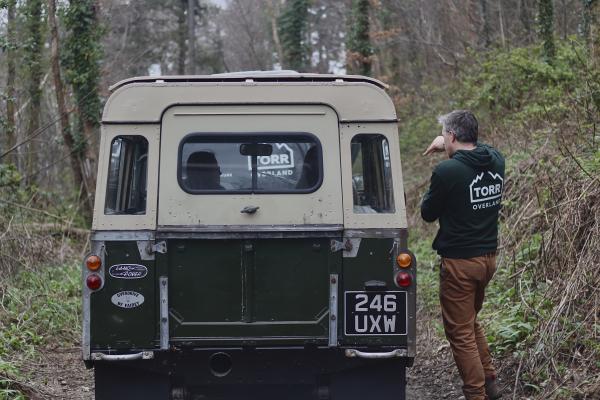
After a day on the lanes, I always do a post-drive walk-round. Check that the number plates are still visible and clean. Look for any vegetation lodged in the wheel arches or underneath. Check the tyres over for cuts or damage from rocks. Take a look at the underside if you’ve been through anything particularly rutted or stony. It takes five minutes and it’s saved me from missing things that would have become bigger problems if left unchecked.
Recovery points are another non-negotiable. Factory tow eyes are a minimum, but if you’re heading somewhere remote, properly rated aftermarket recovery points give you and any recovery crew real options if things go wrong. Make sure they’re fitted, accessible and not caked in rust before you set off.
Get Out There, But Go Prepared
Green laning is one of the great joys of Land Rover ownership. It connects you to the countryside in a way that road driving simply doesn’t, takes you to places most people will never see, and gives your vehicle a reason to exist beyond the school run. There’s a real community around it too. Generous, knowledgeable people who are usually very happy to help a newcomer find their feet.
My advice for anyone starting out: join GLASS, get yourself an OS map of your local area, and start somewhere close to home. Go with a friend if you can. And before you go anywhere, make sure your Land Rover is in genuinely good shape, not just roadworthy, but genuinely ready. The lanes will reward a well-maintained vehicle and a switched-on driver with some of the best experiences this country has to offer.
The mud washes off. The memories don’t.
Dan Hinton runs Torr Overland, providing guided 4×4 green laning tours and experiences across South Devon and Dartmoor. Find out more at torroverland.com